




I WOULD HAVE STOOD UP and sat down around 20 times in the hour before writing this letter, thanks to Afghanistan and South Africa gifting us the first double Super Over in a World Cup.
In October 2023, sports journalist Sharda Ugra wrote in THE WEEK about 10 impact players to watch out for, and in that list was Rahmanullah Gurbaz, the Afghan who scored 84 off 42 against the Proteas in regulation time on February 11. When the second Super Over demanded four sixes, he scored three. He sliced the fourth to point and broke hearts in Kabul.
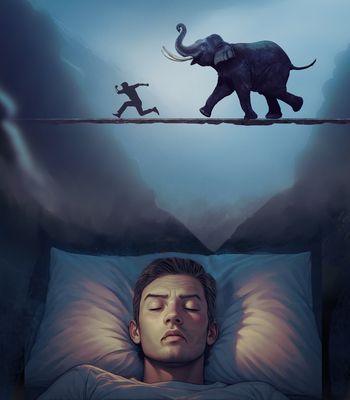 Imaging: Binesh Sreedharan
Ugra wrote this in 2023: “While AB De Villiers is Gurbaz’s hero for the 360º range, which is also the Afghan’s signature, he follows from a long line of trailblazing ODI wicketkeeper-openers. Take a bow, Romesh Kaluwitharana and Adam Gilchrist, world champions both.” Wonder what AB would have thought about the Afghan Ekalavya almost humbling his home side.
I imagined myself as a college boy in the stadium, with friends in tow. We would have walked out to the nearest chai stall and dissected the match threadbare. This line would have surely come up about Gurbaz’s last response to Keshav Maharaj: “Thoda idhar udhar hota toh… (If he had hit it a little to this side or that…). Such is cricket. Such is life.
Something will remain a dream, like Gurbaz hitting the fourth six and me being back in college. But dreams are nothing to scoff at, says Senior Subeditor Sachin Jose in this week’s cover. Dreams can heal you, empower you, and bring out the entrepreneur in you.
The cover story has an interview with Kelly Bulkeley, director of Sleep and Dream Database, and interview-based articles about New York-based photographer Nicolas Bruno, who turns his nightmares into art, and Korean artist Bongsu Park who auctions dreams to the highest bidder.
Do you want to solve your problems through dreams? Sachin and Senior Infographic Designer Sreemanikandan S. teamed up to produce a graphic page based on Harvard professor Deirdre Barrett’s dream incubation technique.
In other articles, Chief of Bureau (Delhi) Namrata Biji Ahuja interviews Mostafa Sarwar Farooki, filmmaker and cultural adviser to the Bangladesh government. He works out of former prime minister Sheikh Hasina’s erstwhile residence, which is being converted into a museum. It is a thoughtful conversation where he says that while nations are obsessed with the past, diplomatic relations and friendship between countries are driven by present realities.
Closer to home, Namrata interviewed Nemcha Kipgen, the first woman deputy chief minister of Manipur. “Representation matters, especially in times of crisis. Women often work quietly, managing families and communities under extreme stress. Having women in leadership ensures that these realities are understood at the policy level,” she told THE WEEK.
In @leisure, Senior Correspondent Shubhangi Shah revisits Satish Gujral’s art and speaks with his son, architect Mohit Gujral. Mohit says that art has gained respect as a commodity and is unsure whether people have become “deeply sensitive to the subject itself”. Then there are anecdotes, like the time Satish had his own cochlear implant removed because it was “troublesome”.
Deputy News Editor Navin J. Antony writes that our instinct to see time as linear, with the past falling behind and the future stretching ahead, is a relatively modern development. The ancients saw time as cyclical. Days, seasons, feelings and the tides rose and fell and repeated themselves.
Come to think of it, in cyclical terms it might not be entirely impossible to imagine myself in college. But, to be made young again might be a tall order, however cyclical time is.
