


The story of Zoramthanga, former chief minister of Mizoram, begins with a prophecy. He was born during World War II to an impoverished couple in a remote Mizo village, the seventh of eight children. Being barely literate, his parents could not record the exact date and year of his birth. Fortunately, his elder brother Hranghleia noted it down—July 13, 1944. Even though they didn’t record his birth, his parents had decided on a name well in advance, suggested by his maternal uncle, who considered himself to have prophetic gifts: Zoramthanga. ‘Zoram’ means ‘Mizoram’ and ‘thanga’ means ‘famous’. As it turned out, Zoramthanga would go on to become one of the most famous men in Mizoram, leading his people to a costly freedom.
It was a freedom they had been fighting for since 1947, when the Mizos felt their region had been forcibly annexed to the newly independent India without their consent. In 1961, the people of Mizoram formed the Mizo National Front (MNF) under Laldenga, a former accountant in the Mizo District Council.
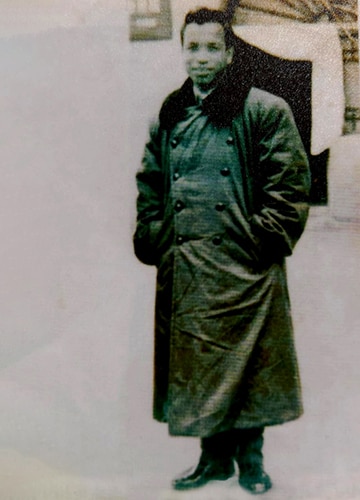 In China in 1979
Zoramthanga’s new memoir—From Guerrilla Fighter to Chief Minister—is more the story of MNF than his own: how it formed a parallel government and became an armed insurgency hiding in the heavily forested mountains of Mizoram. How the soldiers spent years wandering without home or family and suffering severe hardships. How he became Laldenga’s secretary and right-hand man and initiated peace talks with New Delhi, leading to the historic peace accord of 1986. He assumed leadership of the MNF party upon Laldenga’s death in 1990, ultimately becoming a three-time chief minister of Mizoram. His is a story of hope amid hardship, humour amid hunger, faith amid trials. Ultimately, it is a love letter to his state.
“People think my story is a concocted one because it reads like fiction,” Zoramthanga told THE WEEK from his home in Aizawl. “The incidents seem unlikely, the characters too lucky. ‘Make them a little less fortunate so they will be a little more believable’, I was told. But these are the facts. God has been good to us.”
The former chief minister is referring to incidents like what happened when Pakistan surrendered to India on December 16, 1971 when Bangladesh was formed. The MNF cadres were living in East Pakistan then, under the protection of the Pakistan government. MNF’s only option seemed to be to surrender to India, too. They met in Rangamati (in today’s Bangladesh) to decide what to do. At last, Laldenga got up and said, “It appears that we are not in a position to find out the solution. Let us first of all pray to God in right earnest.”
Everyone assembled prayed from the heart and soon, the answer arrived in the form of a Pakistani major who told them that they could escape via speedboat on the Tatkawng River. Only a few Indian soldiers and Mukti Bahini (a Bengali guerrilla resistance movement that fought for Bangladesh’s independence) were guarding it. The solution was literally heaven-sent. Carrying only the essentials—clothes, rice, pots, guns and ammunition—over 1,000 people set out on six motor boats. The thick fog slowed their progress towards the Tatkawng estuary. The next afternoon they reached the Farwah Camp where a company of Mukti Bahini were stationed. There was heavy exchange of fire between the two groups until the Mukti Bahini soldiers were defeated. The Mizo national army did them no harm, instead letting them go in peace. And that’s how the MNF went into hiding in the dense forests of Arakan in Burma, under the protection of the Communist groups there.
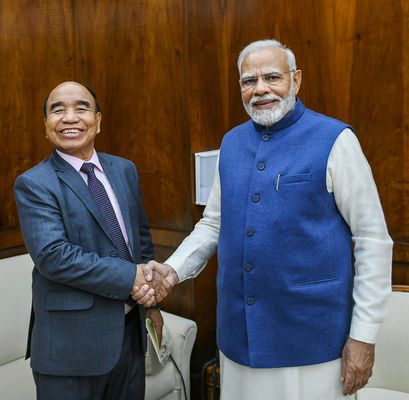 With Prime Minister Narendra Modi during a meeting in Delhi in 2022 | PTI
The tribulations of the MNF soldiers in their years of living in jungles and among primitive tribes were unimaginable. They had to ensure they did not get lost in the thick forests. They had to be constantly on the move for fear of getting caught. Sourcing food and sufficient supplies was another never-ending worry, for which they were heavily dependent on the villagers. At one point, they were competing with wild boars and porcupines for food, eating roots, barks, leaves and wild fruits. Living so far from Mizoram made collecting donations from home impossible. Then there was the constant threat of disease, living in hot and humid jungles infested with mosquitoes. They did not even have money to buy new clothes when their old ones got worn out.
Yet, what stands out in the book is their resilience, the lighter moments leading to much bonhomie among the fighters. Once, for instance, when the MNF comrades were living outside the Mizo village of Ratu, they would occasionally sleep in the homes of villagers. One night, the Sikh Regiment of the Indian Army surrounded the home in which four of them were staying. Two of them escaped from the back. Another crept into bed between the couple who owned the home. Zoramthanga lay beside the daughter in another room. If the forces barged in, he could tell them that she was his wife. Sometime after this incident, the villagers sent a message to him as a joke: “Your wife with whom you slept has become pregnant. She is expecting soon. Come to see your baby.” Such jokes, writes Zoramthanga, eased the pressures of life in the underground and helped build relations with the villagers.
Faith was another important part of their underground life. New recruits had to take an oath of allegiance with a hand on the Bible. No national day or special function was held without prayer and thanksgiving. They built churches wherever they were headquartered and held regular services. The general impression of life in the underground is one of lawlessness and bloodshed, but nothing could be further from the truth, writes Zoramthanga.
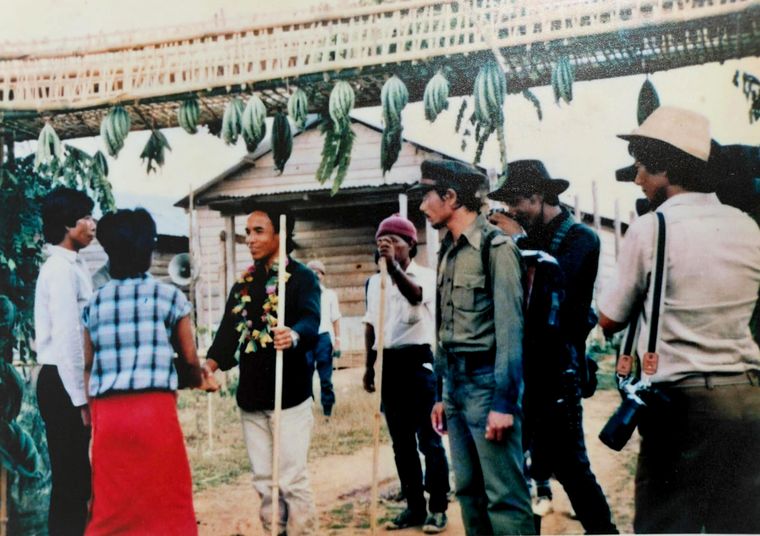 Peace, at last: MNF leaders’ triumphant return after signing the peace accord.
When they were headquartered for eight years at Kiaukoro Hill in Bangladesh in the 1980s—which they called Chhimtlang—they organised inter-village football tournaments with the Bawm tribes. In the evenings they held community feasts. A military training school was established with regular refresher courses. The young men were given training in all kinds of arms and ammunition—from vintage World War II firearms to modern AK-47s and rocket launchers. They were even trained in household duties like cooking and winnowing rice to make them completely self-sufficient. Zoramthanga gave lectures in history, geography, politics and social studies for about seven hours each day.
While the soldiers were leading a precarious existence, the MNF leaders were busy trying to secure their future. Zoramthanga’s rise through the ranks had been swift, mostly because of his education. In 20 years of his life as an underground freedom fighter, he was the only English honours graduate among them, an indication of the low level of education in Mizoram. In 1969, at the age of 25, he became Laldenga’s secretary. In this capacity, he travelled with Laldenga to several countries, in the beginning to secure arms and support, and then to conduct peace talks with representatives of the Indian government.
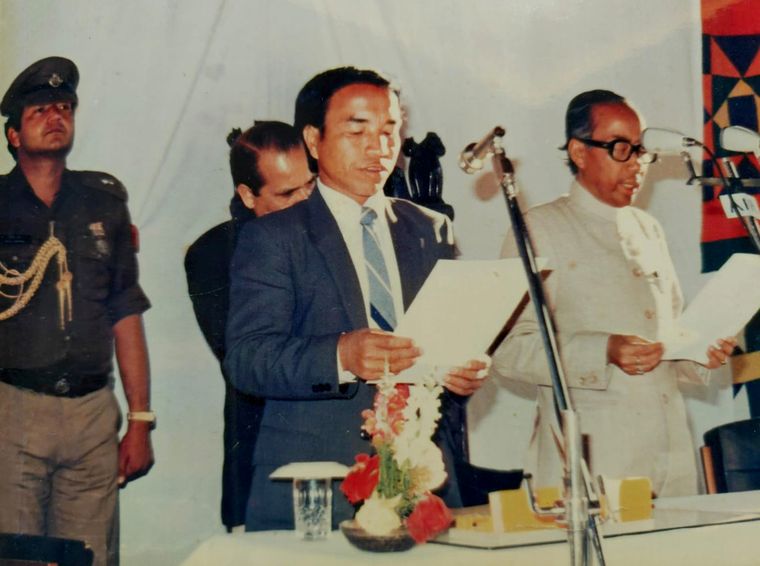 Zoramthanga being sworn in as minister for the first time.
It was while they were leading a clandestine existence in Pakistan that they decided to go to China for more advanced arms, using a “stateless passport” that was ordinarily issued to people living in border areas without citizenship. They stayed in Peking, meeting several top Chinese officials including Prime Minister Chou En-lai. The Cultural Revolution was at its zenith in China then, with children taught in schools that Chairman Mao Tse-tung’s love for them exceeded that of their parents. Although the Chinese government agreed to supply them with ammunition, the issue was transportation. Air-dropping them was impractical. The other option was to ship them, which also proved unviable because an American fleet of warships controlled the Strait of Malacca and would not let a Chinese ship through. During their last meeting with Chou En-lai, he asked Zoramthanga how old he was. When he learned that he was only 26 years old, Chou En-lai laughed and replied, “Well, you are 50 years younger than me. Chairman Mao is still older.”
While the leaders were living in Pakistan in the 1970s, they decided that their best chance for a peaceful future was resuming talks with India. Knowing Pakistan would not facilitate this, they considered their options to enter India undercover. One way was through the Arabian Sea via Karachi and then to Mumbai with smugglers, which was too risky. Another was through the Thar Desert on camels. This too was rejected on account of the robbers patrolling the desert. The third and most viable option was to enter through the Ferozepur sector. Passports and travel documents were not required on that route. They travelled from Islamabad to Lahore to Kasur, from where the border was only 1km away. They had to go east but without a compass they could not distinguish east from west. They simply kept walking in one direction till daybreak. In the morning, if people greeted them with ‘as-salamu alaikum’, they would know they were still in Pakistan. But on the other hand, if they were greeted with ‘namaste’, they would know they were in India. Unfortunately, the farmer they encountered a while later greeted them with ‘as-salamu alaikum’. They had spent the whole night walking further inside Pakistan. Soon, Pakistani border rangers took them to ISI personnel who brought them back to Islamabad after detaining them in the ISI lock-up for one night.

With that failed attempt, their options diminished. Finally, they contacted the Indian embassy in Kabul, after which followed lengthy talks with the Indian government in various countries, from Bangkok and Geneva to Rome and Cologne. Zoramthanga had to have new passports every time he travelled abroad from Pakistan with different assumed names. He also had to change his parents’ names and addresses, and it was difficult to keep track. “Depending upon the country I visited they would ask, ‘What is your name?’ Then I had to answer according to the passport I carried. Oh, how easy it was to give them the wrong answer,” he writes.
Finally in January 1976, they flew Air India from Frankfurt to Delhi, from when the peace talks continued in India. After the Congress was routed in the 1977 general election following Emergency, the Morarji Desai government was not amenable to the MNF’s demands. “Mr Laldenga, I don’t trust you,” said Desai. To which Laldenga politely replied, “Sir, that’s your privilege.” The Janata government refused to continue the peace talks unless the MNF members laid down their weapons, which they were not willing to do. Finally, the stalemate was broken only after Indira Gandhi came back to power in 1980. The talks received a further impetus after her assassination in 1984, when her son Rajiv became prime minister. In the end, the government agreed to upgrade Mizoram from a Union territory to full statehood, while the MNF leaders agreed to lay down arms when the peace treaty was signed.
On June 30, 1986, the peace accord—ending 20 years of killings, arrests, curfews and insecurity—was signed. The news was greeted with unparalleled jubilation across Mizoram. In the MNF headquarters at Chhimtlang—where Zoramthanga was living after a daring escape from Delhi where he was kept under house arrest—it arrived a day late. As they went about their morning duties, a comrade came running with the information. Zoramthanga turned on the television set. Sure enough, the Aizawl station was broadcasting the announcement at regular intervals. “Our hearts leapt with joy,” he writes. “We called a meeting, declared the day a holiday and prepared a grand feast… together we celebrated with music, food and thanksgiving.”
As the former chief minister told me, it was a peace that would stick. “In all our neighbouring regions—Myanmar, Bangladesh, Manipur—there is political instability, insurgency and violence,” he said. “Mizoram, on the other hand, is one of the most peaceful states in India.”
From Guerrilla Fighter to Chief Minister is a touching story told in an engaging way. The rebels’ daring escapades, chase sequences and gun fights give it the feel of a novel. Perhaps that is why Zoramthanga is hoping a Bollywood or Hollywood director will turn his story into a James Bond-style thriller. Sometimes, truth really is more action-packed than fiction.
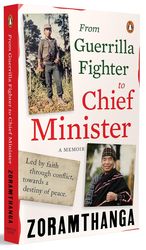
FROM GUERRILLA FIGHTER TO CHIEF MINISTER
By Zoramthanga
Published by Penguin
Price Rs599; pages 430