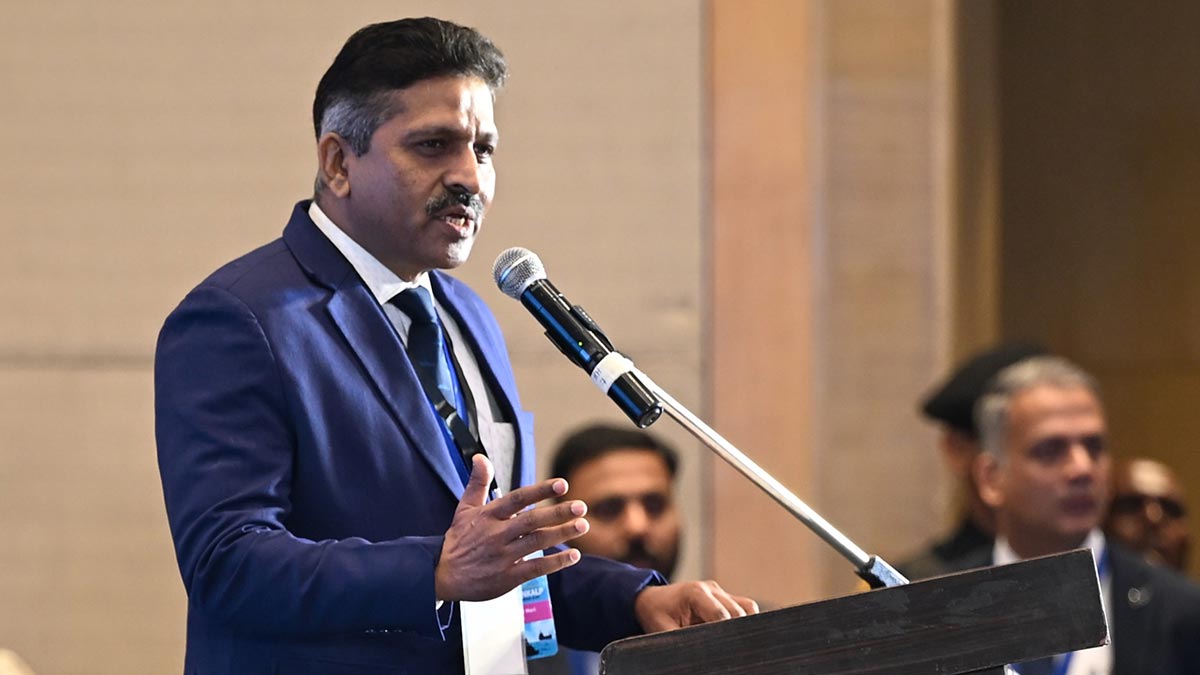
COMMODORE P.R. HARI (RETD), CMD of GRSE, on how to transform India into a global shipbuilding powerhouse:
◆ India must prepare for a ‘Volatility, Uncertainty, Complexity and Ambiguity’ (VUCA) global environment where localised conflicts can rapidly escalate into full-scale, multidimensional wars.
◆ A massive Rs69,725-crore government programme is under way, specifically targeted at enhancing infrastructure and production capabilities to meet modern defence needs.
◆ While India aims to be a top 10 maritime nation by 2030 and top 5 by 2047, its current global shipbuilding share is only 0.16 per cent to 0.17 per cent, signalling an urgent need for exponential growth.
◆ The need of the hour is a robust domestic ancillary industry. Shipbuilding cannot succeed in a vacuum; it requires a deeply integrated and responsive local supply chain.
◆ India’s current maritime skill set is “only just adequate” for present needs and must be significantly expanded to meet future high-tech demands.
◆ India has a proven track record in warship building. The goal now is to apply those specialised skills to dominate the non-defence/commercial shipping segment.
◆ Indian shipyards have successfully constructed 275 warships to date, demonstrating a foundational technical capability that is ready for further scaling.
◆ The pace of production is increasing, with 67 ships delivered to maritime forces in just the last decade and another 55 platforms currently under construction.
◆ Maritime strength is no longer just about trade; it is a critical pillar of national preparedness in the face of shifting global power dynamics.