



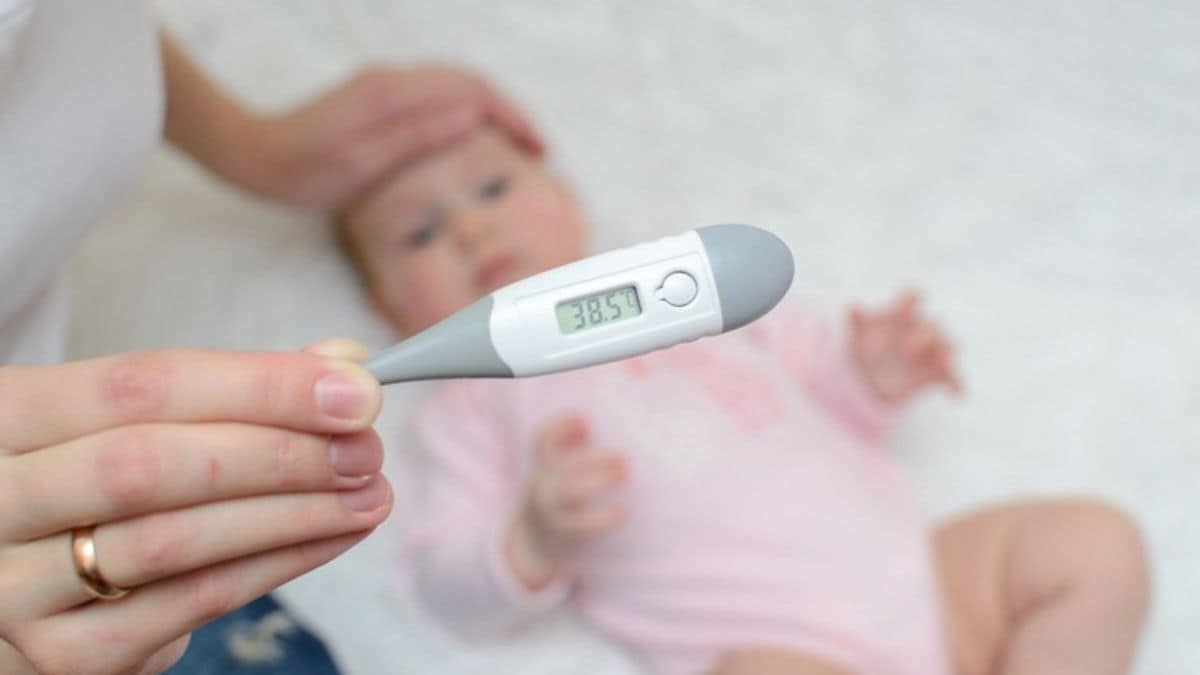
Hardik’s struggle began with a fever that simply wouldn't break. For the 20-month-old Bengaluru toddler, the sudden, spiking heat initially indicated a seasonal illness—the kind that routinely sends worried parents looking for a doctor's reassurance in the quiet hours before dawn. But as the hours wore on, it became chillingly clear that what was happening inside Hardik's little frame was something far more severe.
By the time the baby was admitted to the Paediatric Intensive Care Unit at Manipal Hospital Yeshwanthpur in March 2026, his tiny lungs were already suffering. The tests conducted confirmed Influenza A, an aggressive strain of the seasonal flu virus.
How severe is Influenza A?
Unlike common flu strains, Influenza A causes severe respiratory complications, particularly in young children and the elderly. The infection can be very dangerous for babies, putting infants under age 2 at a high risk for severe complications. Babies under six months face the highest rates of hospitalisation and death because their immune systems are still developing and they are too young to receive the flu vaccine.
Bengaluru has been witnessing a fresh wave of Influenza A cases this season, following a similar outbreak in December 2025.
In Hardik's case, the infection within days triggered Acute Respiratory Distress Syndrome (ARDS), air-leak syndrome, and cardiogenic shock. Investigations further revealed pancytopenia, a serious medical condition characterised by a drop in all three blood cell lines (RBCs, WBCs and platelets), and acute liver injury.
On top of it, physicians also suspected Hemophagocytic Lymphohistiocytosis (HLH), a rare and life-threatening immune activation syndrome. The baby was put on steroids and intravenous immunoglobulin to stabilise the condition. The blood counts and liver function showed early improvement accordingly.
However, since the respiratory status refused to stabilise, he was intubated and placed on mechanical ventilation. But that too proved insufficient.
According to Dr Nanditha Rathinam, senior consultant, Paediatrics and Paediatrics Intensive Care, Manipal Hospital Yeshwanthpur, initiating ECMO was the only viable option to save his life.
“The baby arrived at the hospital in a critical condition; he was lethargic, dull, and experiencing rapid, strained breathing. We initially placed him on a High-Flow Nasal Cannula (HFNC) for support, but his condition rapidly deteriorated. Hence, we had to proceed with intubation and place him on conventional mechanical ventilation, but unfortunately, his lungs were failing, and that also proved insufficient to oxygenate him. At that point, initiating ECMO became our only viable option to save his life,” said Dr Rathinam.
On March 13, Hardik was placed on Veno-Arterial ECMO (VA ECMO), a life-support system that takes over the function of both the heart and lungs. He remained on VA ECMO for nearly 3 weeks. As cardiac function recovered, the team transitioned him to Veno-Venous ECMO (VV ECMO), lungs-only support, for another 3 weeks.
Dr Murali Krishna, senior consultant -Cardiothoracic and Vascular Surgery, who led the surgical interventions, noted the gravity of the decision. “Without ECMO, the chances of this baby’s survival were very slim. ECMO can be considered even from the neonatal period through to adulthood, for both respiratory and cardiac indications, and our centre is equipped to deliver it.”
After 6 weeks of care in the hospital, Hardik was discharged in stable condition with a structured follow-up plan in place.
“Parents should watch for fever above 40°C, a child who remains unwell even between fever episodes, worsening breathlessness, and poor activity or oral intake,” said Dr Rathinam. Annual flu vaccination, recommended by the Indian Academy of Pediatrics for all children above six months, remains the most effective prevention available.
