



A recent trope pushed by sections of the opposition claims that India has been “silent” on the Iran war. The accusation is worth examining, because it raises several questions. Is India really silent? Does this mark a departure from our traditional foreign policy? And, most important, what has New Delhi’s chosen course achieved?
Let us start with the consequences, because the proof of the pudding lies in outcomes rather than on rhetoric. Two recent developments strongly suggest that India’s approach is yielding tangible dividends.
First, the decision by the US to ease pressure on India’s purchases of Russian oil—at least temporarily—has provided valuable breathing space at a time of volatile global energy markets. For a large, energy-dependent economy, such flexibility is no small gain.
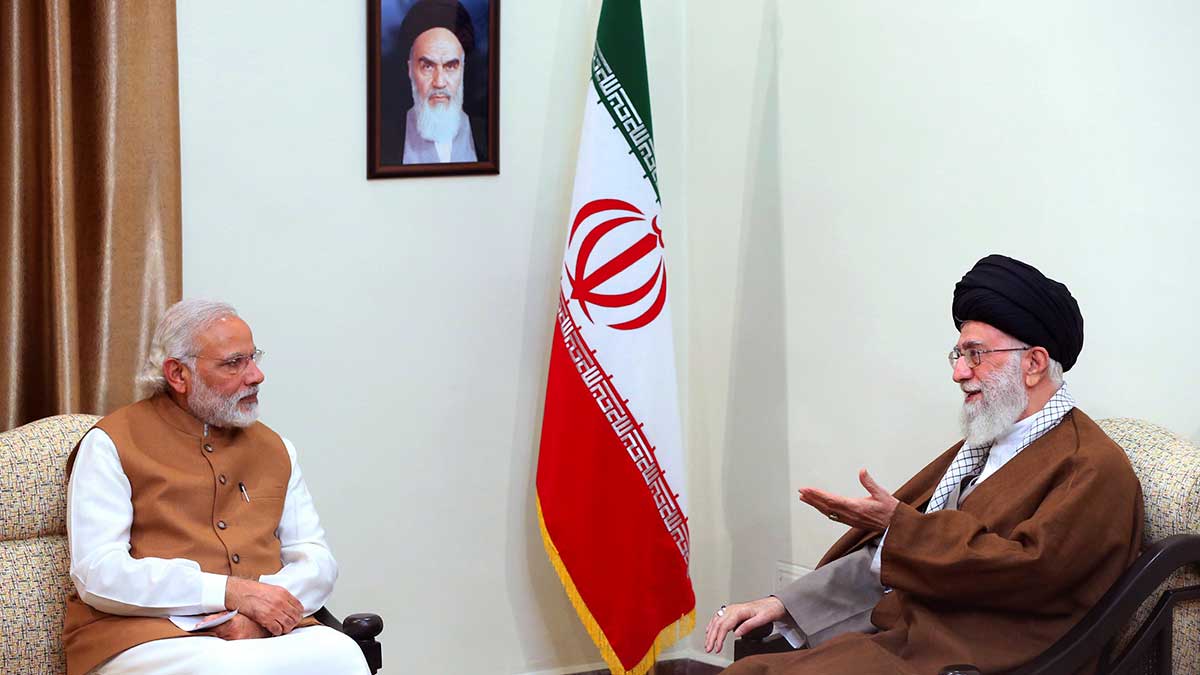
Second, Iran has ensured safe passage for Indian vessels through the Strait of Hormuz. At least three oil tankers, and nearly 30 other ships carrying hundreds of Indian seafarers, were able to pass without incident. Tehran has even publicly acknowledged India’s balanced approach—this gesture, in a conflict zone, carries considerable weight.
Together, these developments have generated a quiet buzz in diplomatic circles. Some observers have even suggested that India—and Prime Minister Narendra Modi in particular—may be uniquely positioned to play the role of an honest broker should efforts towards dialogue and de-escalation gather momentum.
But what exactly has India said—or chosen not to say—during this crisis? And how does this compare with earlier phases of Indian diplomacy?
A closer look shows that India has issued carefully calibrated statements rooted in universal principles: respect for sovereignty, territorial integrity, and the importance of restraint, dialogue and de-escalation. At the same time, these statements have consistently highlighted India’s own interests, including the safety of her 9.5 million diaspora in the region.
In essence, the Modi government has taken India’s long-standing doctrine of strategic autonomy to the next level. The principle remains the same—independent decision-making—but is now more aligned with national interests.
This marks a contrast with some opposition voices, including Sonia Gandhi, which echo the rhetoric of the old non-aligned movement. In its heyday, NAM spoke the language of strategic autonomy but invariably aligned India with the “have-nots” of the global order in opposition to the west. That posture may have been understandable for a newly independent republic struggling with poverty. But India, today, occupies a very different position in the world.
We are now among the world’s five largest economies and, for several years, the fastest-growing among them. The India that once sloganeered alongside the global south—without corresponding influence—is no longer the India of today.
The new India sits confidently at the global high table. It engages with multiple partners simultaneously, navigates complex rivalries with pragmatism, seeks outcomes rather than ovations, and has emerged as a true champion of the global south.
This evolution may discomfit those who prefer the familiar certainties of earlier decades, often invoking “principle” as justification. Yet, the current approach is arguably rooted in a deeper principle: the ability to influence outcomes constructively rather than merely issue statements of solidarity.
India’s diplomacy today is guided by an ancient insight attributed to Chanakya but often forgotten in modern times—that the core of all foreign policy should be national interest.
As India’s measured response to the Iran war achieves stability, protects our citizens and commerce, and fortifies our influence, it demonstrates that quiet diplomacy often speaks far louder than slogans.
Baijayant ‘Jay’ Panda is National Vice President of the BJP and is an MP in the Lok Sabha.
